Fiber Laser Welding Machine: The Ultimate Solution For Precision Welds
Summary: You must be aware of the welding process that is performed to fuse different metallic objects by applying a certain amount of heat in a localized area. Due to advancements in laser technology, fiber laser welding machines have been introduced to the world recently and are being utilized to produce heat and undergo welding operations. This has completely transformed the way manufacturing industries
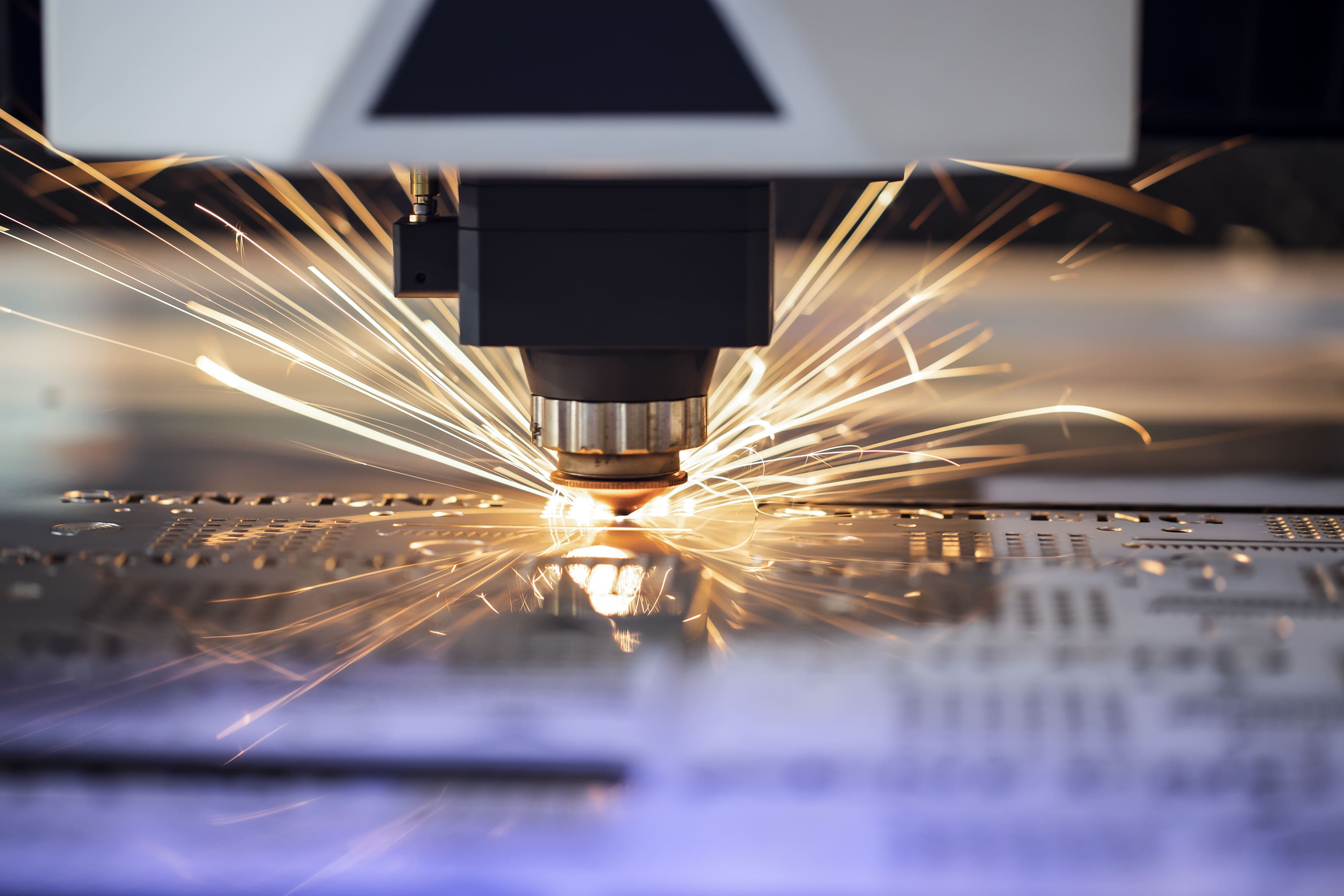
You must be aware of the welding process that is performed to fuse different metallic objects by applying a certain amount of heat in a localized area. Due to advancements in laser technology, fiber laser welding machines have been introduced to the world recently and are being utilized to produce heat and undergo welding operations. This has completely transformed the way manufacturing industries day-to-day operations!
Fiber laser welding utilizes a focused high-powered laser to produce heat that is required for welding purposes. The beam of laser light is delivered using an optical fiber cable to the laser head, which further concentrates it on the surface of the workpiece, leading to a molten pool by the merging path of the materials, bringing about a fusion when it cools down.
In this article today, we are going to discuss fiber laser welding machines in detail and cover important points such as their advantages, applications, types, and much more!
What is a Fiber Laser Welding Machine & How Does It Work?
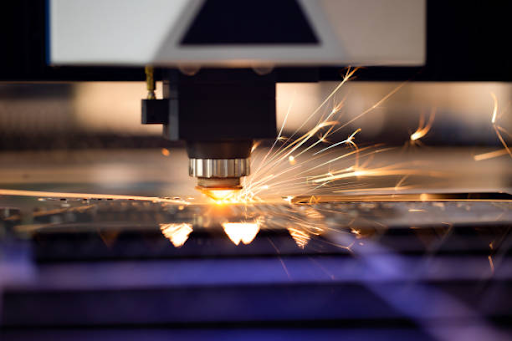
A fiber laser welding machine is a specialized tool that is utilized for precision welding in numerous industries. It uses a fiber laser as its energy source in order to develop a highly focused and intense laser beam. This laser beam is then focused on the surface of the workplace which results in controlled and precise melting and uniting of different metal parts.
What are the Types of Fiber Laser Welding Machines?
Fiber laser welding machines are popular for their versatility and are used in numerous applications for joining metals and other materials. These machines are classified on the basis of their power output, design, and intended applications.
a) Handheld Fiber Laser Welding Machine: These are portable fiber laser welding machines that enable laser operators to weld in different situations and locations. They are generally utilized for on-site welding, repairs, and in applications where the material cannot be loved easily.
b) Robotic Fiber Laser Welding Machine: This type of laser welding machine is integrated with robotic arms and holds automated welding abilities. They are generally employed in manufacturing industries like automotive, aerospace, shipbuilding, aerospace, and other industries where precise and repetitive welding is mandated.
c) Desktop Fiber Laser Welding Machine: The desktop fiber laser welding machine is specifically designed for smaller-scale welding chores and is usually employed in research facilities, laboratories, and prototyping. They are more compact and retain lower power output when compared to industrial machines.
d) Industrial Fiber Laser Welding Machine: Industrial fiber laser welding machines are larger, more robust, and developed for heavy-duty welding applications in manufacturing and production habitats. They are capable of handling thicker materials and deliver high-speed & precision welding.
e) Single-Mode Fiber Laser Welding Machine: This type of machine transmits a highly focused laser beam, making them suitable for applications that mandate fine detail and accuracy, such as manufacturing parts of medical devices and electronics.
f) Multi-Mode Fiber Laser Welding Machine: Multi-mode machines are designed to operate in multiple laser modes, such as pulsed or continuous wave (CW) mode. This versatility entitles them to deal with a wide range of welding undertakings, from fine, precision welding to deep penetration welding.
Applications of Fiber Laser Welding Machines
1. Automotive Industry: Fiber laser welding machines are employed to join automotive elements, such as exhaust systems and body panels, assuring powerful, weightless, and precise welds.
2. Shipbuilding: Fiber laser welding guarantees the structural integrity of ship elements and structures, which is extremely crucial for maritime safety and durability.
3. Aerospace Industry: These machines are critical for welding aircraft elements as they help maintain the structural integrity of essential parts and minimize heat-affected zones.
4. Healthcare Industry: The Fiber laser welding process ensures precise and contaminant-free fusions in delicate medical parts and implants, attending to or fulfilling stringent quality standards.
5. Electronics Manufacturing: Utilized for welding electronic elements and tightly sealing sensitive devices, providing reliable connections and safety against different environmental factors.
6. Jewelry & Fine Metalwork: Fiber lasers allow intricate and high-quality welding in jewelry making and make the pieces of jewelry durable and visually appealing.
What are the Factors that affect Fiber Laser Welding?
1) Type & Thickness Of The Material: The type and thickness of the materials being welded play an important role in the welding method. Different types of materials possess varying absorption characteristics for laser energy. Thicker materials might need additional laser energy for adequate penetration and fusion.
2) Laser Parameters: Laser parameters such as laser power, wavelength, and pulse duration can be adjusted in order to match the specific prerequisites of the welding chore. Optimizing laser parameters is important for attaining the desired weld properties.
3) Beam Quality: A high-quality beam ensures promising control over the heat infusion and reduces the threat of flaws in the weld, such as cracking or porosity.
4) Welding Speed & Travel Path: The speed of the laser beam and the path it follows are important factors. Decent control assists in managing heat input and avoids overheating or underheating of the substances.
Advantages of Fiber Laser Welding over Traditional Welding Methods
Traditional welding techniques such as MIG or GMAW utilize a consumable electrode that is ideal for huge, poorly fitting components. Whereas fiber laser welding does not involve the utilization of consumable electrodes and needs slight edge preparation, it can be smoothly automated and is a five times faster process than traditional welding methods. Fiber laser welding methods even provide better precision and demand low heat consumption.
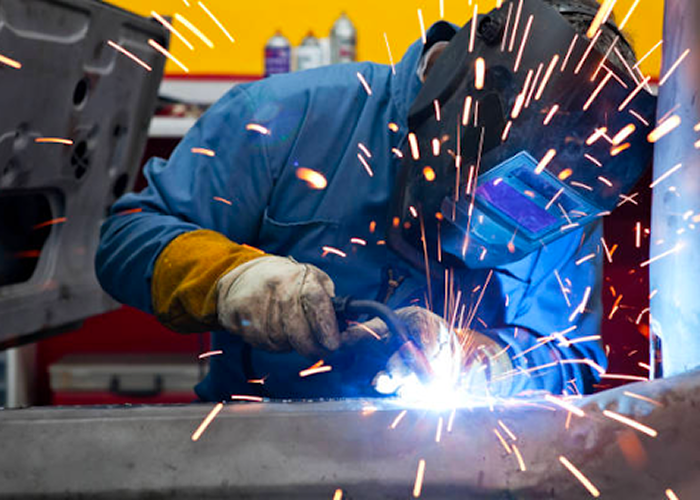
One of the most notable advantages is its precision! Fiber lasers can concentrate on exceptionally diminutive areas with high power density, authorizing pinpoint accuracy in the welding procedure. This precision leads to minimal heat-affected zones, diminishing the chance of warping, distortion, and material deterioration.
Fiber Laser Welding Vs. Other Traditional Welding Methods
1) Difference Between Fiber Laser Welding and Ultrasonic Bonding: The fiber laser welding process is much faster (up to 10x faster for EV battery lines). Lasers produce powerful and enduring joints with higher precision. Ultrasonic bonding cannot be utilized for welding thick elements and is limited to malleable metals and plastics.
2) Difference Between Fiber Laser Welding & Resistance Welding: Fiber laser welding is a non-contact method evoking small, accurate welds with less heat input. Resistance welding is harder to control because of electrode unraveling and transmits electric current directly via the metal elements.
3) Difference Between Fiber Laser Welding & TIG Welding: Fiber laser welding generates a smaller heat-affected zone. TIG welding (GTAW) utilizes a non-consumable tungsten electrode and is highly labor-intensive, requiring a high skill level to control heat and filler rods.
4) Difference Between Fiber Laser Welding & MIG Welding: Fiber laser welding creates higher-quality welds for high-precision applications and allows for scaling production. MIG welding (GMAW) uses a consumable wire electrode and is generally less precise than fiber laser solutions.
In Conclusion
Fiber laser welding machines represent a substantial advancement in welding technology, which is here to offer unparalleled efficiency, versatility, and, most importantly, precision! Because of fiber laser welding machines, today, welds of high quality with minimal heat distortion have become easier to obtain, and it enables superior control over welding parameters.
Their compact design and ease of integration into automated procedures make them crucial mechanisms for modern manufacturing. However, we hope that this article has helped you to understand fiber laser welding machines in a better way.
Tags: Cutting, Welding